Socials

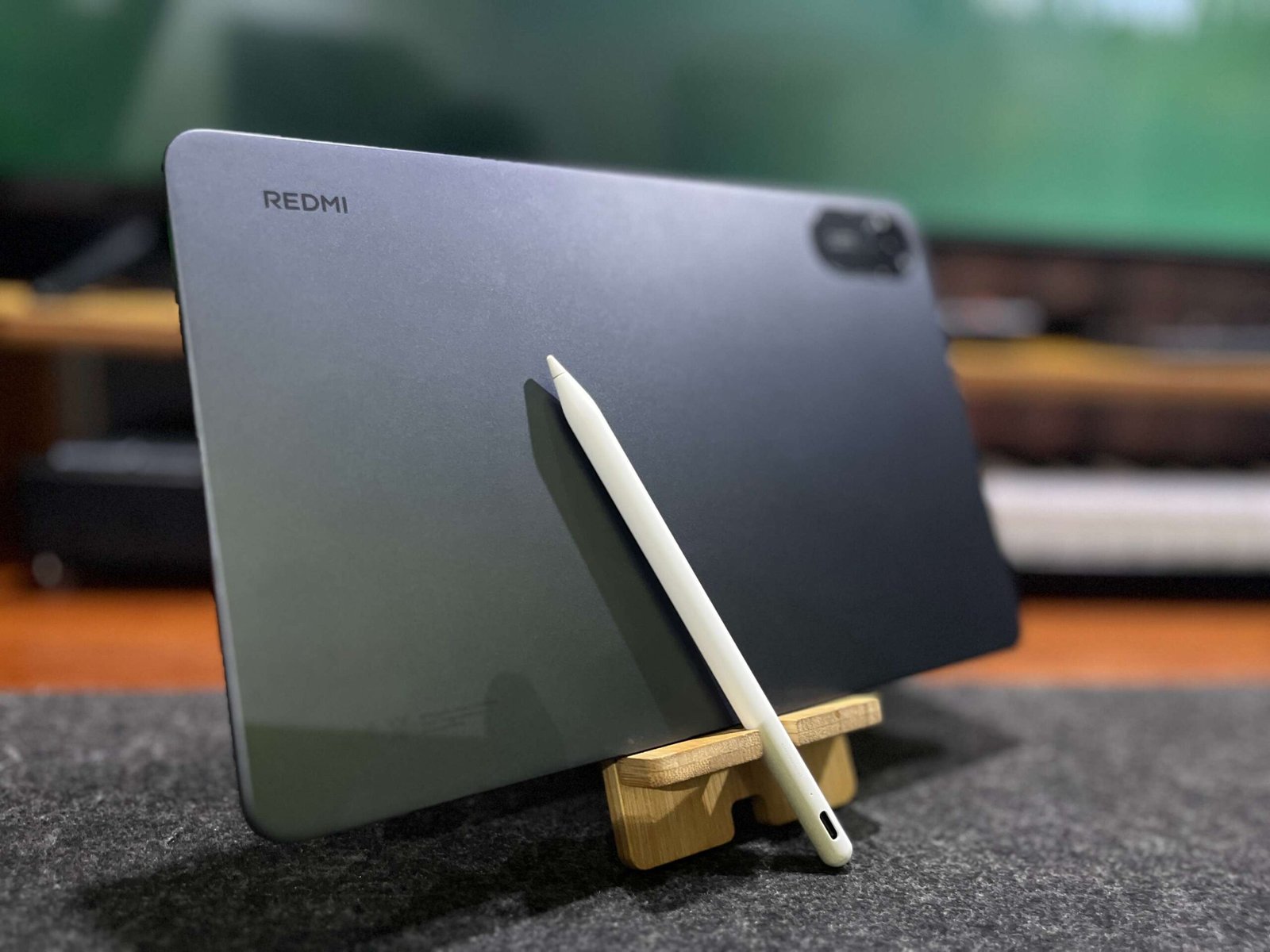

Tablets are completely pointless devices…. Is what I used to think. For years, I looked at them as this weird “in-between” tech. It’s like a phone having an identity crisis or a laptop that gave up halfway through. If you already have a powerful Laptop on your desk and a smartphone in your pocket, why on earth would you spend hundreds of dollars on a third screen?
I never really understood the use case. I figured it was just another gadget for people with too much disposable income and not enough pocket space. But then, I did the “stupid” thing. I went out and bought one. I was almost certain I’d be listing it on a secondary market within a month, full of regret.
But after using it daily for a few months, not only do I not regret it, I actually wish I got it way sooner. It has fundamentally shifted how I work, how I travel, and even how I relax. By the end, I’m going to share the specific budget-friendly tablet I settled on—and why I think it’s the only one actually worth your money in 2026—but first, I need to explain the reasons why I now value tablets.
Reason 1: My Tablet is Now My TV
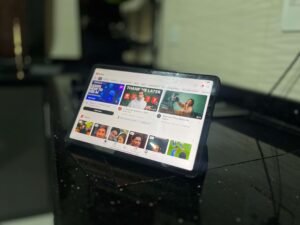
We need to have a serious conversation about TVs in this day and age. For most of us, especially if you’re a solopreneur or a remote worker living in a modern apartment, a TV has become little more than a $500 piece of wall decor.
Think about it: when was the last time you actually sat down, turned on a television, and watched a scheduled program? We do everything on our devices now.
Watching a high-production movie, a fast-paced football match, or even a YouTube video on a 6-inch smartphone screen is not a terrible experience, but can be much better. The aspect ratio is cramped, and you’re constantly interrupted by notifications.
A phone can feel too small and overly multifunctional for focused tasks, while a TV is too large and designed mainly for one purpose. The space in between where you want something immersive yet flexible, is exactly what a tablet fills perfectly.
A tablet is the “TV you can actually use.” If you live in a compact living space, buying a TV is often a waste of space and money. The tablet fills that void perfectly. It’s my portable cinema. I can take it to the kitchen while I’m prepping a meal, propping it up to watch a tutorial or a match, and then move it to the sofa when I’m winding down. It offers the immersion of a large screen without the commitment of a dedicated furniture piece. It’s functional, and not just decorative.
Reason 2: The Ultimate Study & Note-Taking Powerhouse
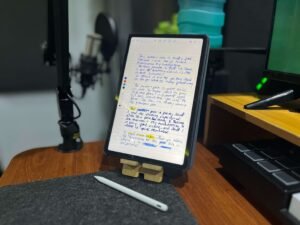
For the longest time, I was a “pen and paper” guy. But the friction of losing notebooks or not being able to search through my handwritten notes was becoming a productivity bottleneck.
I started jornualing last year and quickly realised I didn’t feel comfortable with someone finding my journal and reading my deepest, darkest thoughts. I needed to be able to secure my journal, something a pen and paper couldn’t do for me.
The tablet has effectively replaced my need for traditional paper. For when I’m jornaling, at a seminar, or even taking notes during a church service, the tablet allows me to stay organized and it looks and feels a lot more professional than fumbling with a stack of loose papers or staring into a tiny phone screen.
But where it really shines is as a study device. Reading long-form E-books or complex PDF documents on a laptop feels like “work,” and reading them on a phone is a recipe for eye strain. On a tablet, the experience is tactile. I can highlight, annotate, and flip pages in a way that feels natural. It’s transformed my “research phase” from a chore into something I actually look forward to. If you’re someone who constantly consumes information to stay ahead in your industry, the ability to carry a reading and writing machine is a massive ROI.
Reason 3: Enhancing Video Production & Workflow
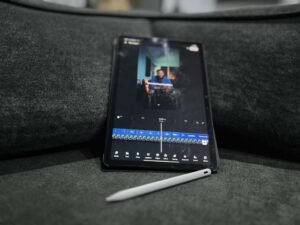
You’ve probably noticed those creators who use handwritten overlays or sketch out diagrams to explain complex topics. That used to be a nightmare to post-produce. Now? I use my tablet and stylus to create those sketches natively. It adds a unique, human element to my videos that breaks up the “talking head” monotony and helps me communicate my ideas way more effectively.
Secondly, when I’m filming unscripted or semi-scripted videos, I use the tablet as my digital prompter or bullet-point reference. Placing a notebook on your lap looks messy, and checking your phone every two minutes makes you look distracted. Having a sleek tablet mounted just off-camera or even handheld, allows me to stay on track while maintaining a professional presence.
I’ve even started using it for lightweight editing. For quick Reels, Shorts, or tweaking a thumbnail on the fly, the touch interface is often faster and more intuitive than using a mouse and keyboard. It hasn’t replaced my MacBook for the heavy lifting, but it has certainly optimized the “boring stuff” in my production workflow.
I didn’t expect a tablet to actually improve the quality of my YouTube videos, but it has.
Reason 4: The New Travel Companion

I love to travel with my work, which means travelling with my laptop and other gadgets like headphones, microphone, mini keyboard, audio interface and stuff like that. But then there are those trips where you don’t really want to do much work like heavy video editing or music production, but you know you’ll need to check emails, tweak a script, or maybe finish a blog post.
In the past, I’d lug my heavy laptop, the charging brick, and all the peripherals regardless of the trip, Now? If it’s a short trip, the laptop stays home. The tablet is my choice travel device.
I can sit in a cafe or on a plane and comfortably handle my scripting, journaling, and administrative work. Then, when the work is done, I switch modes and it’s my entertainment hub. It’s the definition of “minimalist efficiency.” It lightens my bag and, more importantly, it lightens the mental load of traveling with expensive, heavy gear.
Which Tablet to Get in 2026?
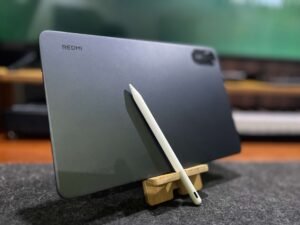
So, which tablet did I actually buy? Because I’m a big believer in not overspending on tech that isn’t your primary “engine,” I couldn’t justify dropping $1,200 on an iPad Pro just to take notes and watch movies. I needed something budget-friendly that still packed a punch.
After a lot of research, I settled on the Redmi Pad 2, which was released in June of 2025. In the current market, it’s sitting at about 260,000 Naira (roughly $175 USD). I also picked up the Redmi Smart Pen for about 70,000 Naira ($45 USD).
For under $250 total, I have a device that handles 99% of what the high-end tablets do for a fraction of the cost. It’s snappy, the screen is beautiful for the price point, and the battery life is incredible. It’s widely considered the best “value for money” tablet on the market right now, and after a few months of daily use, I couldn’t agree more. It lives up to the hype.
CONCLUSION
If you’ve been sitting on the fence, thinking tablets are just oversized phones—I get it. I was right there with you. But once you integrate one into a proper workflow, you’ll instantly feel the differnece. It has made my home office feel more like a self-sufficient bunker where I can work, learn, and relax without ever feeling limited.
If you’re curious about how this specific budget setup performs in the real world, I’m actually working on a full-on, deep-dive review of the Redmi Pad 2 and the Smart Pen. I’ll be sharing my experience after using it for several months, the pros, the cons, and some hidden features I’ve discovered.