Socials

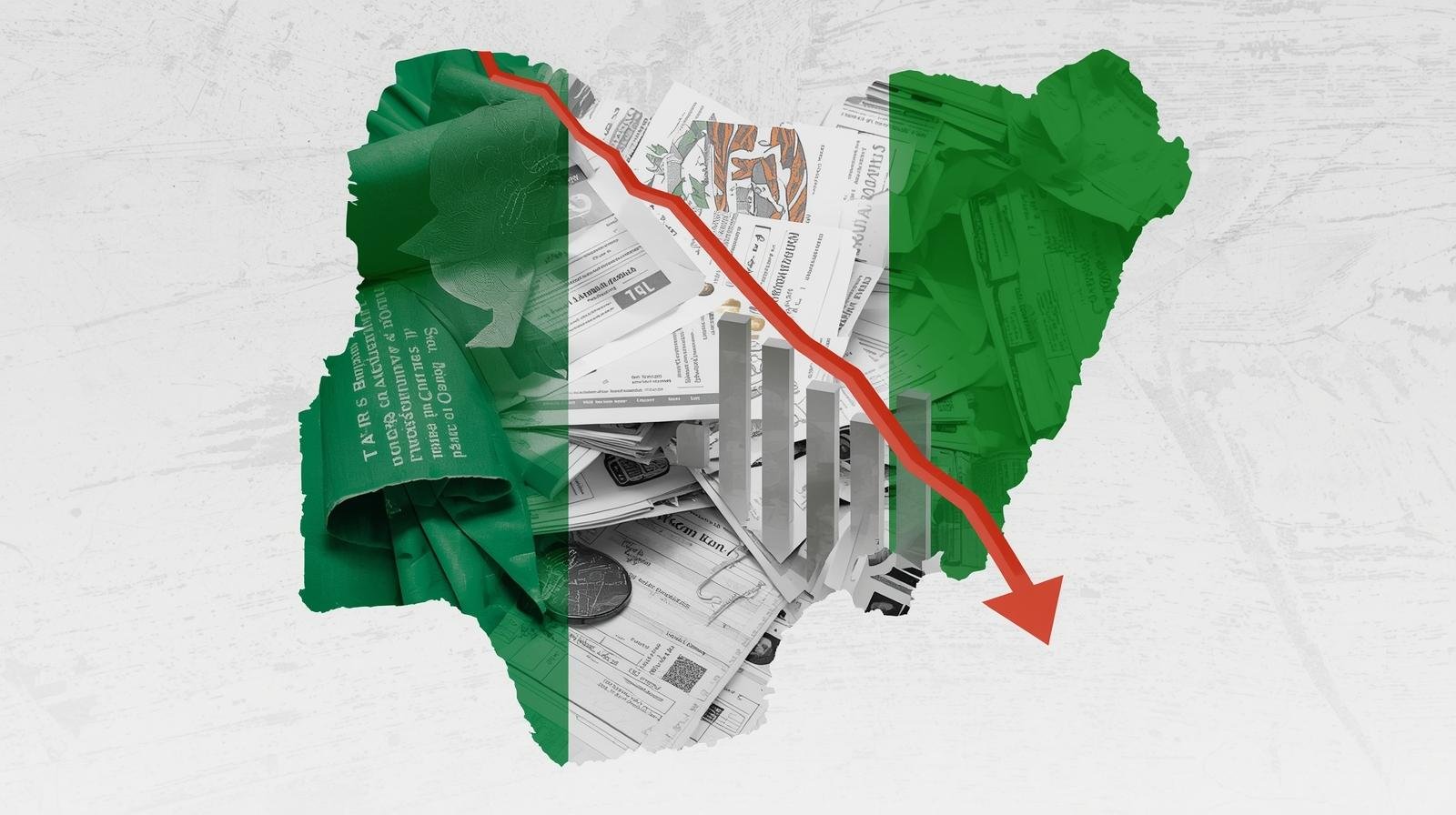

Recently, the buzz around Nigeria’s new tax reforms has reached very high levels, the latest talking point being the march 13th deadline for filing tax returns. It’s almost funny watching the shock on people’s faces, as if the concept of taxation and filing returns just dropped from the sky yesterday.
Taiwo Oyedele, Chairman of the Presidential Committee on Fiscal Policy and Tax Reforms, recently stated that: in many states, less than 5% of people actually file tax returns.
The reality is that Nigeria has always had tax policies, and the fact that the Nigerian people seem to only just be finding out, points to a deeper problem, a problem caused not by the people, but by the government.
It’s easy to make policies and reforms, but getting these reforms to work is going to be significantly harder than the government anticipates. Because it’s really about undoing decades of psychological conditioning. So let me share with you the two reasons why I believe these reforms are walking into a brick wall.
1. 65 Years of Lawlessness
Nigeria gained independence in 1960, and 65 years later, the country remains as disorganized as a nation still fighting for its freedom. For decades, the government’s primary focus was the “commonwealth”—specifically, the massive influx of crude oil revenue.
Because the money was “free” (drilled from the ground rather than collected from the pockets of citizens), the government didn’t feel the need to be accountable to the people. In return, the people didn’t feel the need to follow the laws.
This created an unspoken psychological contract: “The people will let the government loot the oil money without protest, and in return, the government will turn a blind eye to the enforcement of tax laws.”
And for 65 years, the average Nigerian became a “mini-government.”
- You provide your own electricity with generators or solar.
- You sink a private borehole to provide your own water supply.
- You pay for street guards or build 10-foot walls with electric wires to get some semblance of security.
Reminds me of the 2015 song titled ”Lokal Govament” by Tha Suspect Ft Mi Abaga, the chorus of the song goes… “You be local government for yourself, if you dey protect your area, dey give yourself electricity… you be local government for yourself”.
This is the sad reality of Nigerians, and when you provide 100% of your own basic services, the concept of paying the state to “provide services” feels like a ripoff.
It sounds odd, but setting out to enforce tax laws in Nigeria somehow feels like a breach of contract, because how does the government justify looting the country blind, only to turn around and try to dip their hands and collect directly from the people’s pocket.
But why this sudden shift of focus from oil revenue to tax revenue? Well, I have a theory, one that you will find makes total sense.
The “Oil-to-Tax” Pivot
You see, with rapid advancement in technology, and the global shift toward green energy and electric vehicles, the Nigerian government is finally staring at a reality where oil revenue is no longer a guaranteed meal ticket. For decades, they ignored tax enforcement because the oil was flowing. They prioritized short-term looting over building a structured, functional and tax-compliant society, which they would have built by taking the common wealth of the people and actually using it for national development and the collective good of the people. Now that gas stations are on the brink of becoming relics, they’ve suddenly pivoted to aggressive tax reforms. They want the people to now sign a new contract to keep revenue flowing and keep political power lucrative for those that wield it.
But the problem is, You cannot spend 65 years fostering a lawless environment for your own benefit and then expect the people to suddenly understand and embrace civic duty. This lawlessness wasn’t an accident—it was a design choice. Fixing it now will require far more than new legislation; it requires reversing decades of systemic neglect that the government itself cultivated.
2. Leadership by Proxy: The “Do as I Say” Problem
The second major hurdle is that the people at the top are not leading by example.
During election season, politicians are everywhere. They stand in queues, they eat roasted corn on the street, go out to vote, and they pretend to be just like the “common man” to get elected.
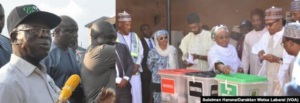
But when it comes to taxes, the same show of “we’re in this together” is completely missing.
In high-compliance societies, the President’s tax returns are often public knowledge. Since the 1970s (following the Watergate scandal), every U.S. President and major-party candidate voluntarily released their tax returns as a show of transparency, until Donald Trump broke this tradition in 2016. Yes it is just a tradition and not a law, but that’s what makes it effective, because they don’t have to release their tax returns, but they do it to foster a patriotic spirit.
In Nigeria, the leaders expect the citizens to be transparent while they remain opaque, openly living above their expected income. For any other citizen, that will draw the attention of law enforcement, but somehow these select few are above it, while expecting everyone else to be law abiding.
Public officials are actually the easiest people to audit because their official earnings are public record.
According to data available from The Revenue Mobilisation Allocation and Fiscal Commission (RMAFC): The President of Nigeria earns an annual salary of ₦14,058,820, translating to a monthly income of ₦1,171,568, while state governors receive ₦7,782,968 annually, or ₦648,581 monthly.
Yet, we see these same leaders:
- Spending hundreds of millions on election campaigns.
- Owning mansions in London, Dubai, and Lagos.
- Sending their children to elite foreign schools.
- Living lavish lifestyles that their official salaries couldn’t fund in a hundred years.
Obviously, they are not paying taxes on the “extra” income (wherever that came from) that funds this lifestyle. How can a country where the leaders conspicuously ignore the law, expect the tailor in Aba or the freelancer in Lagos to comply?
The Way Forward
For these reforms to work, the government needs to do more than just make laws and wave an iron fist in front of the people. They need to rebuild the social contract.
- Lead by Example: Every elected official should publicly publish their Tax returns
- Clear Plan: Tax revenue should be tied to specific, visible projects
- Show The Work: The commonwealth of the people should be felt by all, electricty, roads, security, transportation, systems should work.
- Audit the Top: If a politician’s lifestyle exceeds their salary, the tax man should be the first person at their door. No one should be above the law
Until then, the new tax reforms will likely be viewed as just another attempt to squeeze the life out of a population that is already gasping for air.
The textbook argument that “citizens must pay taxes before the government can function” falls flat on it’s face in the case of Nigeria, and for good reason. For over half a century, the government had unrestricted access to our natural resources, yet there is little to show for it in terms of infrastructure or social welfare.
To the average Nigerian, the government’s track record is the ultimate dealbreaker. If they weren’t prudent with the “free” wealth from the ground, what is the guarantee they won’t mismanage our hard-earned personal income? Asking for tax now feels less like a partnership for development and more like a demand for a fresh injection of cash after the previous well has been sucked dry. Trust isn’t built on new policies; it’s built on a history of accountability that simply doesn’t exist and has never existed in Nigeria.